On July 17th, Xing Zhihong, spokesperson for the National Bureau of Statistics and Director of the Department of Comprehensive Statistics of the National Economy, stated at the meeting that "after preliminary calculations, China's GDP increased by 6.9% year-on-year in the first half of the year. There have been more positive changes in the economic sector, and favorable factors supporting the economy to maintain medium to high speed growth and move towards the medium to high end level have further increased. The trend of stable and positive development is more obvious. Against this backdrop, the manufacturing industry has moved towards the medium to high end, and the growth rates of high-tech manufacturing and equipment manufacturing in the first half of the year are 6.2 percentage points and 4.6 percentage points higher than those of large-scale industries, respectively.". It is expected that the elevator manufacturing industry, as a branch of China's equipment manufacturing industry, has a promising development prospect.
It is understood that raw materials account for over 90% of the production cost of elevators. Among them, steel accounts for 50%, and steel is used to produce components such as elevator cars, landing doors, and guide rails, accounting for the majority of raw material costs; Other materials such as neodymium oxide are used for processing neodymium iron boron permanent magnets and for the production of permanent magnet synchronous traction machines. Therefore, there is great potential for the growth of steel demand in the elevator industry.
The construction of new urbanization remains the main driving force for elevator steel demand.
As early as the beginning of 2014, the Central Committee of the Communist Party of China and the State Council issued the "National New Urbanization Plan (2014-2020)" (hereinafter referred to as the "Plan"), which pointed out that according to the universal laws of global urbanization development, China is still in the rapid development range of urbanization rate of 30% to 70%. With profound changes in internal and external environments and conditions, urbanization will enter a new stage of transformation and development focused on improving quality. By 2020, the urbanization rate of the permanent population will reach about 60%, the urbanization rate of the registered residence population will reach about 45%, the gap between the urbanization rate of the registered residence population and the urbanization rate of the permanent population will be narrowed by about 2 percentage points, and efforts will be made to achieve the settlement of about 100 million agricultural transfer population and other permanent residents in cities and towns.
As of 2016, the urbanization rate of China's permanent population has reached 57.35%, and there is still a significant gap from the 70% urbanization target. At present, the urbanization rate is not only much lower than the average level of 80% in developed countries, but also lower than the average level of 60% in developing countries with similar per capita income to China. This means that there is still significant room for improvement in China's urbanization rate. Improving urbanization rates will bring about huge investment demands in urban infrastructure, public services, and residential construction. The continuous promotion of urbanization is the guarantee for the growth of elevator production in China. In the process of urbanization, there is a close relationship between the development of China's elevator industry and real estate development investment.
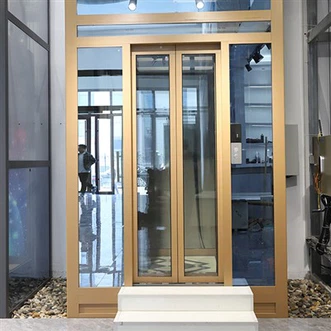
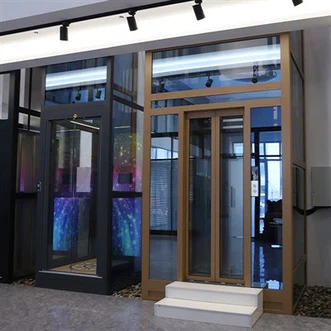
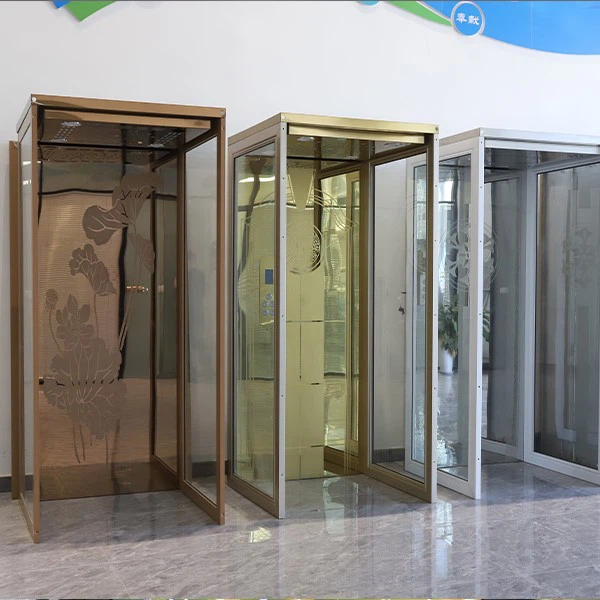
From January to June, the national real estate development investment was 5061 billion yuan, a year-on-year increase of 8.5%; The total planned investment for the construction project is 98588.5 billion yuan, a year-on-year increase of 19.7%, with a growth rate 0.3 percentage points higher than that from January to May. This means that the production and sales of elevators in China will continue to grow steadily. In the first half of the year, government projects such as affordable housing and hospitals became the main factors supporting the development of the elevator industry. Taking hospital projects as an example, with the implementation of medical reform and increased government investment in the medical industry, there has been an increase in medical construction projects in various regions. A series of medical projects affected by policy investment, such as the installation of community hospitals and the renovation of old hospitals, have begun to be implemented, resulting in an increasingly strong demand for the procurement of medical elevators. According to statistics, the total procurement scale of medical elevators reached 230 million yuan in the first quarter of this year, becoming the main driving force for the growth of industry sales in the first half of the year. At the same time, facing the increasingly high-end demand in the current market, it has driven the growth of more high-end customized businesses such as villa elevators and elevator decorations. According to industry insiders, the average sales revenue of villa elevators in China will reach at least 50 billion US dollars in 10 years.
The current Chinese economy is in a period of structural transformation, and the growth rate of real estate development investment will slow down. However, while moderately expanding total demand, supply side structural reform also promotes the survival of the fittest and the upgrading of the elevator industry. With the gradual implementation of the Plan, the construction scale of domestic affordable housing and low rent housing will increase, the demand for fixed assets investment in factories, infrastructure and commercial real estate will increase, and the installation of elevators in low rise buildings will also increase. With the domestic economy entering a new normal, real estate construction and development have entered a stable growth period, and the development of the elevator industry has also entered a new stage. The overall growth rate remaining unchanged and slowing down will become the new normal for the development of China's elevator market in the coming years.
There is a large market space for elevator maintenance and the installation of elevators in old buildings.
As the main means of transportation within buildings, elevators have become an indispensable component of people's lives. It is understood that most properties completed after 2010 are equipped with elevators. In line with the rapid growth in elevator production and sales, the number of elevators in China has also increased rapidly in the past few years. In 2016, the total number of elevators in China reached 4.9369 million, a year-on-year increase of 15.90%, which is five times higher than 10 years ago. The huge number of elevators has formed a huge market for elevator maintenance. Generally speaking, the scrapping period of elevators is about 15 years. As the service life of elevators in use approaches, it is expected that the demand for updating old elevators will further increase in the future. If estimated based on a 15 year elimination cycle, the demand for elimination and renewal in 2015 is equivalent to the total elevator consumption in 2000. In fact, many elevators have been phased out or updated in less than 10 years, and it is estimated that the annual number of elevator updates in the coming years will be 40000 to 60000.
However, industry insiders point out that with the development of urbanization, the demand for new affordable housing, commercial housing, infrastructure, the renovation of existing elevators and the installation of elevators in old buildings, as well as the rapid growth of exports, are all driving forces supporting the development of the elevator industry. In the future, the demand level of the elevator market will be higher, which means that the market demand for high-speed elevators will increase year by year, while the market position of mainstream products for medium and low-speed elevators will not change. Data shows that in the elevator market, 72% is in the new installation market, 24% is in the maintenance market, and the remaining 4% is in the renewal market. Therefore, in the long run, there is still significant development space for the domestic elevator market in the future. Industry insiders predict that the annual installation of elevators in China will reach 1.25 million units in the coming years.