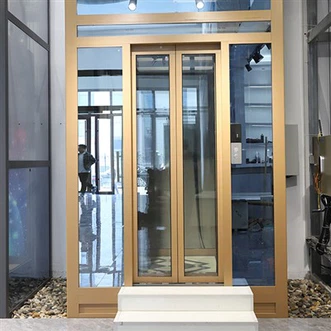
"Five Don'ts" for Children Riding Elevators
1. Do not let children take the elevator alone. Children are still young and have a mischievous and mischievous nature. They enjoy playing dangerous games and even pranks, which can pose safety risks when waiting or riding alone.
2. Don't press the button next to the vertical elevator casually, because you don't know the function of those buttons. If you press them wrong, it may cause a lot of trouble for yourself or others.
3. Do not run or jump in the elevator, as this may cause the elevator to suddenly shut down.
4. Do not place your hands next to the vertical elevator door to prevent fingers from being crushed when the elevator door opens.
5. Do not touch it casually, do not deliberately delay when entering and exiting the elevator door, be careful not to be caught by the elevator door.
Editor's fragmented thoughts: In addition to mastering these common life knowledge, parents should also pay attention to instilling safety awareness and providing necessary preventive measures education in their children in their daily lives. Only in this way can we avoid the recurrence of these tragedies.

Ten Don'ts for Children Riding Escalators
1. Do not play with your phone and tablet while riding the escalator.
2. Do not let your child ride on the escalator alone. Escalators may sometimes break or reverse, and escalators with missing teeth can easily get stuck in your child's hand. When riding on the escalator, it is important to have parents take care of you, and it is best for parents to let your child stand in front of their own body.
3. Do not step on the yellow safety warning line or the area where two steps are connected, and do not walk or run on the escalator to avoid falling or causing danger.
4. Do not touch the escalator barrier with shoes and clothing. If there is a critical situation, there is a red button near the ground at the entrance of the elevator, which is the emergency brake button. In case of a child's hand getting stuck or other situations, you can press this button and the elevator will come to a stop.
5. Do not linger at the entrance and exit of the escalator, do not let children run back and forth on the escalator, and do not kick the escalator straps with your feet to avoid danger.
6. Do not extend your head or limbs beyond the handrails to avoid being hit by obstacles, ceilings, or adjacent escalators.
7. Do not squat on the step pedal, carry a handbag with you, and do not place it on the step pedal or handrail to prevent rolling and injuring people.
8. Do not carry oversized suitcases, wheelchairs, strollers, strollers, or other large items. Instead, use a lift type barrier free elevator.
9. Do not put your hands in the gap between the steps and the apron.
10. Do not go against the trend, climb, play, lean or compete, it is best to leave a space in front and back. Children cannot turn their backs to the elevator, sit on the steps, or run or play in the opposite direction on the elevator. For younger children, before taking the escalator for the first time, parents should teach them how to step on the escalator for the first time. If they find that their child cannot adapt to the speed of the escalator, it is better for parents to hold them. It is safer to walk the stairs with more people.