

Hey there! As an aerial work platform supplier, I often get asked about all sorts of technical details regarding these machines. One question that comes up quite a bit is, "What is the turning radius of an aerial work platform?" Well, let's dive right into it and break it down.
First off, the turning radius of an aerial work platform is super important. It determines how easily the machine can maneuver in tight spaces. You know, those construction sites where there's not a whole lot of room to spare, or industrial facilities with narrow aisles. A smaller turning radius means the platform can get into and out of these areas without much hassle.
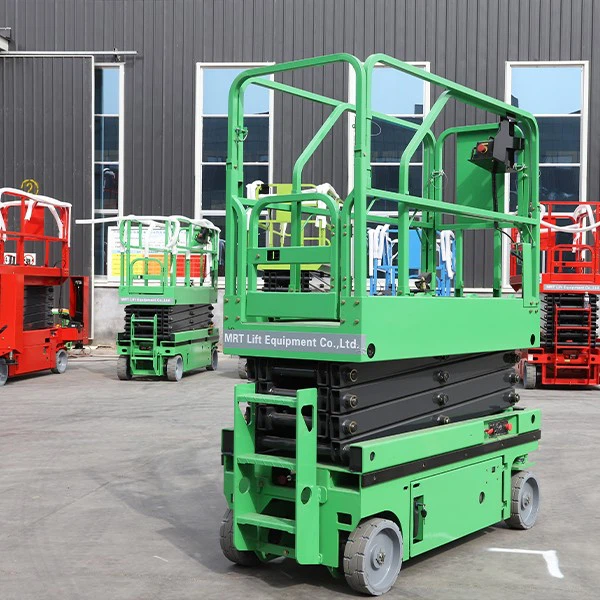
There are different types of aerial work platforms, and each has its own unique turning radius characteristics. For example, scissor lifts are pretty common. They come in various sizes and configurations, and their turning radii can vary significantly.
Let's start with the Battery Powered Mobile Scissor Lift Table. These are great for indoor use because they're powered by batteries, which means no emissions. The turning radius of a battery - powered mobile scissor lift table depends on its size. Smaller models usually have a turning radius of around 3 to 5 feet. This allows them to easily navigate through standard doorways and around obstacles in warehouses or other indoor settings.
On the other hand, larger battery - powered scissor lifts might have a turning radius of 6 to 10 feet. These are typically used for bigger jobs where you need to reach higher heights. But even with the larger turning radius, they're still designed to be as maneuverable as possible.
Then there's the Electric Scissor Lift Platform. Electric scissor lifts are similar to battery - powered ones in many ways, but they may have different power sources and design features. The turning radius of an electric scissor lift platform can also vary based on its dimensions. Compact electric scissor lifts can have a turning radius of just a couple of feet, making them ideal for extremely tight spaces like small workshops or retail stores.
Larger electric scissor lifts, which are capable of reaching greater heights and carrying more weight, might have a turning radius in the range of 5 to 12 feet. The engineering behind these lifts ensures that they can still turn smoothly even in relatively confined areas.
Now, let's talk about the Hydraulic Scissor Lift Platform. Hydraulic scissor lifts are known for their power and durability. They're often used in outdoor construction projects. The turning radius of a hydraulic scissor lift platform is usually a bit larger compared to battery - powered or electric ones, especially for the heavy - duty models.
Smaller hydraulic scissor lifts can have a turning radius of around 4 to 7 feet. These are suitable for smaller construction sites or jobs where you need to move the lift around a moderately sized area. Larger hydraulic scissor lifts, which can handle heavy loads and reach great heights, may have a turning radius of 8 to 15 feet or more. But don't let the larger turning radius fool you. These lifts are built to be stable and reliable, even when making turns in outdoor environments.
Several factors can affect the turning radius of an aerial work platform. The wheelbase is one of the most important factors. A longer wheelbase generally means a larger turning radius. This is because the distance between the front and rear wheels affects how the platform can pivot.
The type of steering system also plays a role. Some aerial work platforms have a single - wheel steering system, while others have multiple - wheel steering. Multiple - wheel steering systems can often provide a smaller turning radius because they allow for more precise control of the turning movement.
The load capacity of the platform can also influence the turning radius. When the platform is fully loaded, it may require a larger turning radius because the additional weight affects the balance and maneuverability of the machine.
So, why does the turning radius matter so much? Well, if you're working in a space - constrained area, a platform with a large turning radius might not be able to get to where you need it to go. You could end up spending extra time and effort trying to reposition the lift, which can slow down your project.
On the other hand, having a platform with a small turning radius can increase your productivity. You can quickly move the lift from one job site to another, set it up, and start working right away. It also reduces the risk of damaging the platform or the surrounding environment, as there's less chance of it hitting obstacles during turns.
If you're in the market for an aerial work platform, it's crucial to consider the turning radius based on your specific needs. Think about the type of work you'll be doing, the space where you'll be operating the platform, and the load you'll be carrying.
Whether you're looking for a battery - powered mobile scissor lift table for indoor use, an electric scissor lift platform for a small workshop, or a hydraulic scissor lift platform for outdoor construction, we've got you covered. Our team of experts can help you choose the right platform with the appropriate turning radius for your project.
If you're interested in learning more about our aerial work platforms or want to discuss your specific requirements, don't hesitate to reach out. We're here to help you make the best decision for your business. Let's work together to find the perfect aerial work platform that meets all your needs.

References
- Aerial Work Platform Industry Standards Handbook
- Technical Manuals of Aerial Work Platform Manufacturers
