

As a supplier of traction home elevators, I often get asked about the maximum inclination angle for installing these nifty contraptions. It's a super important question, 'cause it can really affect how well an elevator works and how safe it is. So, let's dig into this topic and break it down.
First off, let's understand what a traction home elevator is. It's kind of like the workhorse of home elevators. Unlike some other types that might use air pressure or hydraulic systems, traction elevators use ropes or belts that are connected to a counterweight. The motor pulls on these ropes, and that's what moves the elevator car up and down. They're pretty popular 'cause they're energy - efficient and can handle heavier loads. You can learn more about them at Home Lift Elevator.
Now, getting into the inclination angle. In most normal situations, the standard is a vertical installation, which means an inclination angle of 90 degrees. This is how the majority of home elevators are set up. Why? Well, it's the most straightforward way. A vertical installation allows for smooth and efficient movement. The elevator can travel up and down in a straight line, which makes it easier to control and also reduces wear and tear on the components.
But sometimes, due to the layout of a home or specific design requirements, you might need to install the elevator at an angle. So, what's the maximum inclination angle then?
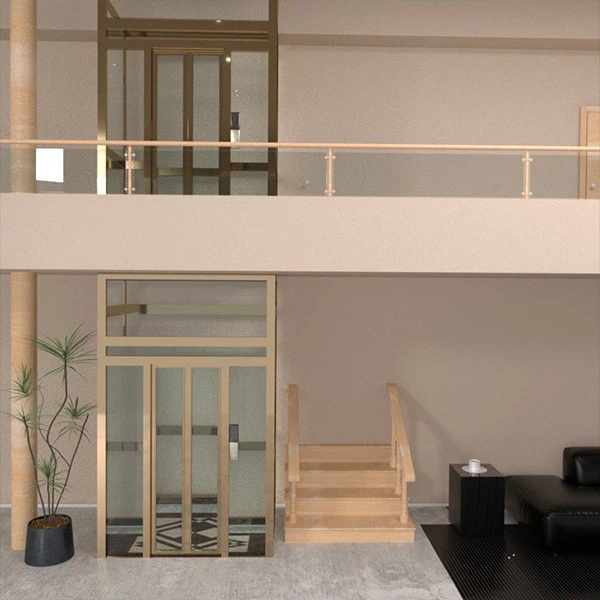

The maximum inclination angle for a traction home elevator usually depends on a few things. One big factor is the design of the elevator itself. Different models are built to handle different angles. Some high - end models might be able to handle an inclination angle of up to 15 degrees off the vertical. That's still relatively close to being straight up and down, but it gives you a bit of flexibility.
Another thing that matters is the type of traction system. If the elevator uses a more advanced and robust traction system, it might be able to handle a slightly larger angle. For example, some modern traction systems with better grip and control can manage a steeper incline compared to older or simpler ones.
Safety is always the number one concern when it comes to installing an elevator at an angle. When the inclination angle increases, the forces acting on the elevator change. There's a greater chance of the elevator car slipping or the ropes losing their grip. That's why most manufacturers have strict guidelines about the maximum angle they recommend. Going beyond these guidelines could void the warranty and, more importantly, put the users at risk.
If you're thinking about a non - vertical installation, you'll also need to consider the space around the elevator. A tilted elevator will need more room on the sides to ensure that the car doesn't hit the walls as it moves. You'll have to make sure there's enough clearance for the counterweight and all the moving parts too.
Now, let's talk about some of the benefits and drawbacks of installing a traction home elevator at an angle.
On the plus side, an angled installation can be a great solution if you have a unique home layout. Maybe you have a sloped floor or a limited vertical space. In these cases, an angled elevator can still provide the convenience of vertical transportation. You can also check out Best Shaftless Home Elevator, which might offer some alternative solutions for tricky spaces.
However, there are some downsides. As I mentioned earlier, there are safety risks associated with larger inclination angles. Also, an angled elevator might be more expensive to install. You'll need to make custom adjustments to the shaft, and the installation process will likely be more complicated and time - consuming. And let's not forget about the maintenance. An elevator at an angle might require more frequent check - ups to make sure everything is working properly.
If you're a bit of a DIY enthusiast, you might be interested in Diy Home Elevator. But keep in mind that installing a traction home elevator at an angle is not a job for the faint - hearted. It's best to consult with a professional installer who has experience with non - standard installations. They can assess your home, recommend the right elevator model, and ensure that the installation is done safely and correctly.
In conclusion, while the standard for traction home elevators is a vertical installation, there is some flexibility when it comes to the inclination angle. Most elevators can handle up to 15 degrees off the vertical, but this can vary depending on the model and the traction system. Safety should always be your top priority, so make sure to follow the manufacturer's guidelines.
If you're in the market for a traction home elevator, whether it's a vertical or an angled installation, we're here to help. We've got a wide range of models and can provide you with all the information you need. Just reach out for a consultation, and we can discuss your specific requirements and find the perfect solution for your home.
References
- Industry standards for home elevator installation
- Manufacturer guidelines for traction home elevators
